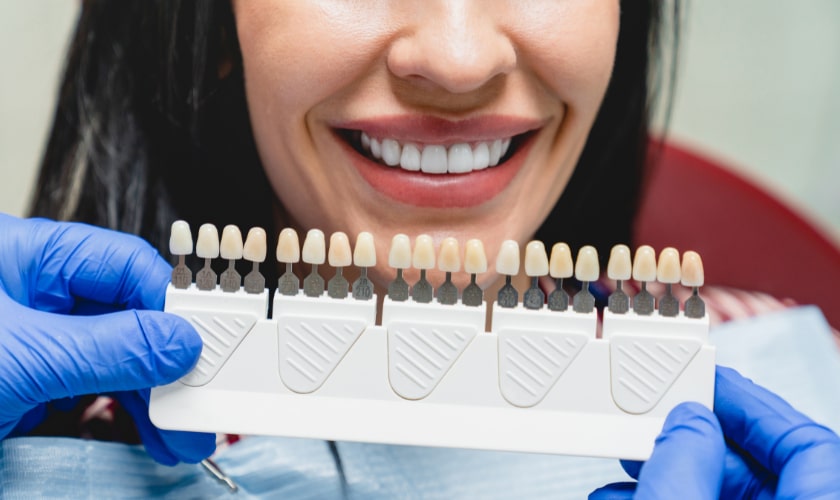


Teeth whitening is a popular cosmetic procedure that can improve the appearance of your smile. Several different treatments are available, and the science behind these treatments is complex. This blog post will explore the science behind teeth whitening treatments and how they work.
Types of Teeth Whitening Treatments
There are two main types of teeth whitening treatments: professional teeth whitening and over-the-counter teeth whitening.
- A dentist or dental hygienist performs professional teeth whitening. It is typically more expensive than over-the-counter teeth whitening, but it is also more effective. Professional teeth whitening treatments can be performed in-office or at home.
- Over-the-counter teeth whitening products include whitening toothpaste, mouthwash, and strips. These products are less expensive than professional teeth whitening, but they are also less effective.
How Teeth Whitening Works
Teeth whitening treatments work by removing stains from the teeth. Stains can be caused by several things, including coffee, tea, red wine, and smoking.
There are two main ways that teeth whitening treatments remove stains:
- Chemical bleaching: This method uses a bleaching agent, such as hydrogen peroxide or carbamide peroxide, to break down the stains.
- Physical abrasion: This method uses a gritty substance, such as baking soda or pumice, to scrub away the stains.
The Science Behind Teeth Whitening
The science behind teeth whitening is complex. However, there are a few key things that you should know:
- Hydrogen peroxide and carbamide peroxide are the most common bleaching agents used in teeth whitening treatments. These agents work by breaking down the chemical bonds that hold stains to the teeth.
- Stains that are caused by smoking or other tobacco products are more difficult to remove than stains that are caused by food or drink. This is because tobacco stains are embedded deeper into the teeth.
- Teeth whitening treatments can make your teeth more sensitive. This is because the bleaching agents can irritate the nerves in your teeth.
- The results of teeth whitening treatments are not permanent. You will need to have your teeth whitened again in the future to maintain your results.
Teeth whitening is a popular cosmetic procedure that can help to improve the appearance of your smile. There are several different teeth whitening treatments available, and the science behind these treatments is complex.
If you are considering teeth whitening, it is important to talk to your dentist about the risks and benefits of the different treatments. Your dentist can also help you to choose the right treatment for you. If you interested in this type of information? visit our blog space.